The visible promise and destination should agree
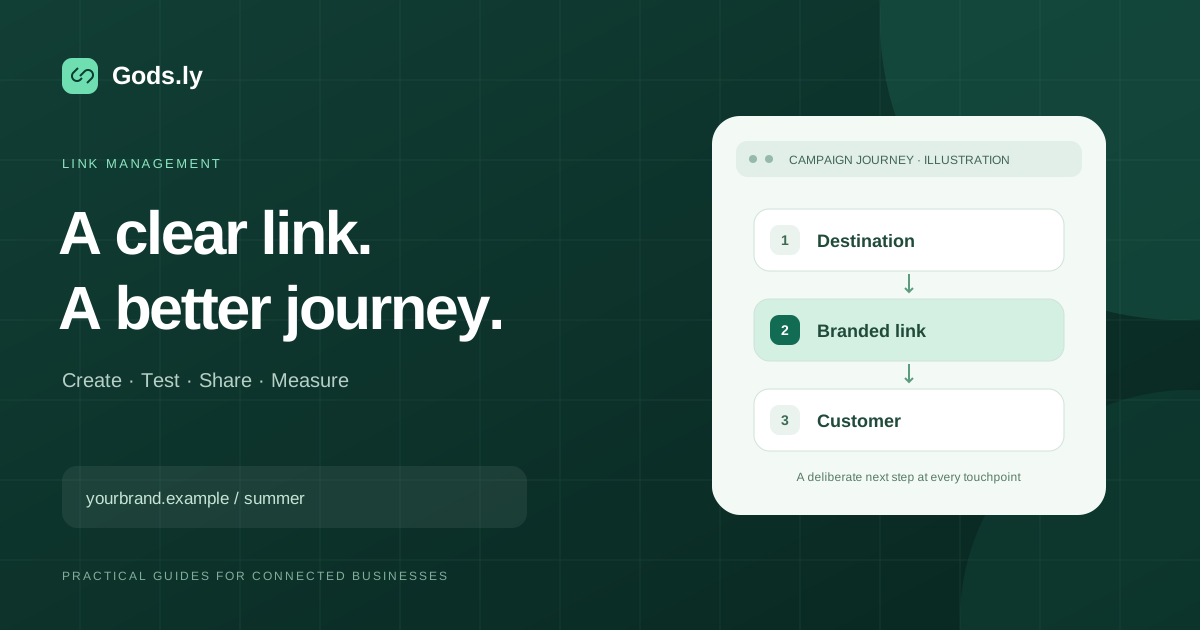
Email recipients should understand what happens after a click. The surrounding call to action, the visible short domain, the alias, and the landing page all need to tell the same story.
A mismatch may look suspicious even when it is accidental. Clear naming and final destination review reduce unnecessary hesitation.
Separate delivery from link ownership
An email platform sends the message, while a link workspace owns the public route and destination lifecycle. Keeping those responsibilities separate makes it easier to update campaign operations without mixing provider credentials into link management.
Store attribution in structured campaign parameters and records, not only inside an unreadable alias. The public name can stay human while measurement remains precise.
Respect consent and suppression
Link analytics do not replace email consent rules. Marketing recipients, transactional messages, security alerts, and unsubscribe behavior need distinct policies.
Use the minimum data needed to understand campaign performance, document retention, and avoid turning a simple click into unnecessary identity tracking.
One campaign, distinct placements
An email campaign often has more than one destination: a headline offer, a product image, a text link and a footer. Give each placement a clear purpose before creating its short link. The same readable alias should not secretly represent different offers for different readers.
Use the UTM Builder to describe the source, medium and campaign at the destination. A source such as newsletter and a medium such as email are easier to compare when the spelling stays consistent. Keep customer names, email addresses, order numbers and other private information out of public aliases and tracking parameters.
A readable link and a measurable destination
For a seasonal campaign, a descriptive example such as go.example.com/summer-offer tells the recipient more than a random string. The managed destination can include campaign parameters while the public address remains concise. This is an example address, not a published Gods.ly customer link.
A branded short domain can make the sender recognizable, but it does not replace the email provider’s authentication, consent controls or delivery checks. Test the actual message on a phone and desktop, including the image link and text alternative. Confirm that the final page explains the same offer as the email.
Read clicks without inventing conversions
Compare link activity by the campaign, placement and dates that matter to the business. A click records activity on the link; it does not establish that the visitor read the whole page, submitted a form or completed a purchase. Confirm those outcomes using the destination’s own registration or checkout records.
If two links have different audiences or were sent on different days, their raw click totals are not a controlled comparison. Record that context before changing the campaign. Gods.ly link analytics and UTM parameters serve complementary purposes: one describes activity on the managed link, while the other helps the destination classify campaign traffic.
Keep the destination useful after sending
An email can remain in an inbox long after a promotion ends. Assign someone to review the destination, its HTTPS availability and its current offer. When a managed destination changes, check the new page before and after saving. An old message should still lead to an understandable outcome rather than an unrelated promotion.
Keep an internal record of the link’s purpose and owner. Recheck the current plan’s capacity and analytics retention before a large campaign. During the Gods.ly soft launch, free access follows the published duration, renewal conditions and workspace limits; it is not a promise of unlimited or permanent service.
URL Shortener · Current access and limits